Are You a Manager or a Leader?
Why Employee Retention Starts at the Top
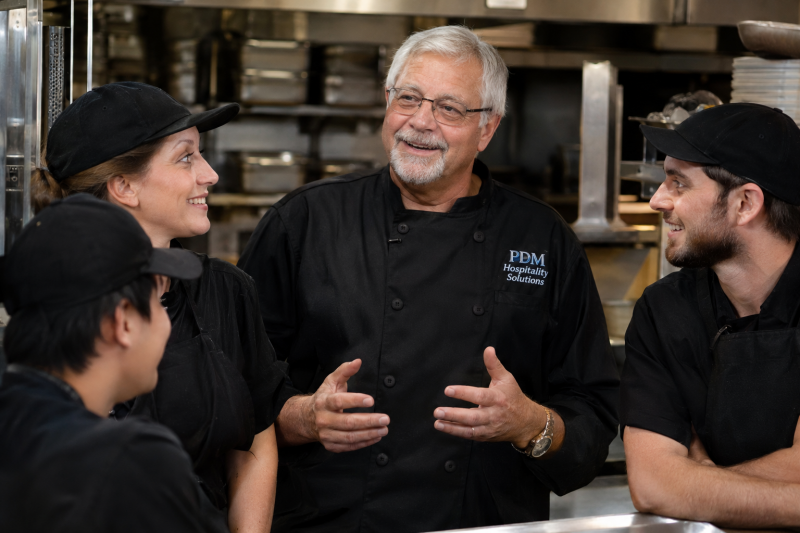
By Philip Moricone | Founder, PDM Hospitality Solutions
Employee turnover has always been a challenge in the foodservice industry. Restaurant owners frequently complain about the difficulty of finding good employees, keeping them motivated, and preventing them from leaving for another job.
But perhaps we should be asking a different question.
Are employees leaving the restaurant, or are they leaving the management?
Throughout my career, I've managed employees in fine dining, casual dining, and fast-food operations, including Wendy's. One thing I consistently experienced was exceptionally low employee turnover.
I don't believe that happened by accident. I believe it came down to how employees were treated, the expectations established, and the working environment management created.
Employee Retention Begins Before the First Day
I always believed that one of the most important parts of hiring an employee was making the job expectations 100% clear before they accepted the position.
During the interview and hiring process, I explained the responsibilities, the days and hours they would be expected to work, and what the position required.
For example, I might tell someone, "You'll need to work Sundays until I can find someone to replace you on that shift."
There was no misunderstanding. The employee knew what was expected, and I knew what we had agreed upon.
If a scheduling issue developed later, I could remind the employee of our original conversation.
That didn't mean I was unwilling to accommodate a request. Quite the opposite. I always tried to be flexible whenever possible.
But there's a difference between accommodating an employee and having someone continually change the conditions of the job they originally accepted.
Flexibility works best when both management and employees understand their responsibilities.
Don't promise employees schedules, opportunities, or working conditions you cannot deliver. Explain the job clearly, be fair about expectations, and follow through on your commitments.
Treat Employees Like People, Not Just a Schedule
I always tried to accommodate my employees whenever possible.
If someone needed a schedule adjustment, time off for a family obligation, or help with a personal situation, I tried to make it work.
Obviously, the business still had to operate. Not every request could be granted. But when employees knew I would make an effort, it created mutual respect.
Employees have lives outside the restaurant. They have children, families, financial pressures, and unexpected emergencies.
Sometimes an employee experiencing financial difficulties might benefit greatly from a small raise. Other times, a family emergency might require a little understanding and flexibility rather than immediately reducing someone's pay because they had to leave for a family emergency.
A little consideration from management can create a tremendous amount of loyalty.
Give Employees an Opportunity to Grow
One mistake managers make is keeping employees in the same position indefinitely.
Why should a dishwasher always remain a dishwasher?
That person might become an excellent prep cook, line cook, or eventually a chef.
A server might want to learn bartending. A kitchen employee might have the potential to become a supervisor or manager.
Cross-training accomplishes two important things. It gives employees opportunities to advance, and it provides the operation with greater flexibility.
When employees see a future with your company, they have another reason to stay.
Cross training is so important. You never know when someone can jump in to help when needed.
Sometimes the Best Management Lesson Requires No Lecture
I remember having a dishwasher who was throwing away hotel pans because they were difficult to clean.
Now, those pans aren't inexpensive, and obviously we couldn't continue throwing them away.
I could have gotten angry, threatened disciplinary action, or embarrassed the employee.
Instead, I simply told him to put the difficult pans aside and that I would clean them myself.
After a couple of days, the problem disappeared.
No yelling. No confrontation. No disciplinary write-up.
The employee understood what needed to be done, and the situation corrected itself.
Sometimes showing an employee how something should be done is far more effective than telling them what they're doing wrong.
Give Employees the Tools to Succeed
How often do we expect employees to perform at a high level without providing what they need?
I recently spoke with a chef whose convection oven door had to be tied shut. Apparently, the oven had been in that condition for years before it was finally replaced.
Think about that.
Management expected the kitchen staff to produce quality food while working with equipment that wasn't functioning properly.
Aside from the obvious safety concerns, imagine the frustration of dealing with that problem every day.
How can management demand efficiency, consistency, and productivity while failing to provide properly functioning equipment?
Does the kitchen equipment work? Are the knives sharp? Are supplies available? Is the restaurant adequately prepared for service?
And here's another important question:
Does the previous shift leave the next shift in a position to succeed?
Nothing creates frustration faster than arriving for work and spending the first hour correcting problems left behind by another shift.
If employees are expected to deliver excellent results, management must provide the training, equipment, supplies, and working conditions that make those results possible.
You cannot demand excellence while accepting conditions that prevent employees from achieving it.
Don't Punish Your Best Employees by Tolerating Poor Performance
One of the quickest ways to lose good employees is to allow poor performers to get away with behavior that everyone else must compensate for.
I experienced this firsthand while working as a pit master at Lowe's Foods.
I genuinely loved the job. There were three of us, and two worked extremely well together. We took pride in our work and supported each other.
Unfortunately, the third employee was frequently late, stood around, and consistently failed to carry his share of the workload.
Eventually, I brought the situation to the department manager's attention.
Instead of addressing the problem, he became angry and told me that how he managed and reprimanded employees was none of my business.
My response was simple:
"Honestly, you don't do either."
Eventually, I quit.
Think about that. I enjoyed the job and worked well with my coworker, yet I left because management refused to address an ongoing performance problem.
The business lost an employee who wanted to be there.
When management tolerates poor performance, the strongest employees often end up paying the price.
Good employees shouldn't be expected to work harder simply because management refuses to hold everyone accountable.
Fairness means establishing reasonable expectations, providing the support needed to meet them, and holding everyone accountable.
Performance Reviews Should Be Positive and Productive
Employees need feedback. They need to understand what they're doing well and where improvement is necessary.
But a performance review shouldn't be an opportunity to list everything an employee has done wrong.
Recognize accomplishments. Discuss challenges. Ask employees what they need to become more successful.
Most importantly, listen.
Sometimes the person washing dishes or working the grill understands an operational problem better than the manager sitting in the office.
A good leader recognizes that valuable ideas can come from anyone.
Don't Allow Bad Managers to Destroy a Good Team
Throughout my management career, I rarely experienced serious employee problems.
Interestingly, some of my biggest personnel challenges involved assistant managers rather than hourly employees.
Occasionally, an assistant manager would develop an attitude toward employees that I simply wouldn't tolerate.
I would address the behavior and give the manager an opportunity to improve.
When that didn't happen, transfers were sometimes necessary. On two occasions, termination was the appropriate decision.
You cannot expect employees to respect an organization when the people supervising them treat them poorly.
A general manager may have an excellent relationship with employees, but that means little if assistant managers are allowed to intimidate, disrespect, or mistreat the staff.
Leadership standards must apply to management as well as employees.
Give Employees a Reason to Stay
I never minded losing an employee to a genuinely better opportunity.
If someone had a chance to advance their career, accept greater responsibility, or significantly improve their financial situation, I was happy for them.
What bothered me was losing someone for another 50 cents an hour.
I always believed that if employees were treated well, enjoyed their working environment, had some flexibility in their schedules, and were given what they needed to succeed, there was little reason to leave for such a small increase.
That doesn't mean wages aren't important. Employees deserve fair and competitive compensation.
But compensation is only one part of the equation.
A positive workplace, good leadership, advancement opportunities, and mutual respect have real value.
When an employee is unhappy, even a small raise somewhere else can become a reason to leave.
When employees enjoy coming to work, the decision isn't always so simple.
The Cost of Poor Leadership
Employee turnover is expensive.
Every departure can mean additional recruiting, interviewing, training, and lost productivity.
New employees need time to learn the operation. Experienced employees understand the menu, equipment, customers, and expectations.
Frequent turnover also affects morale. Good employees become frustrated when they're constantly training replacements or covering for vacant positions.
And ultimately, inconsistent staffing can affect the guest experience.
Retaining good employees isn't simply a human resources objective.
It's an important part of operating a profitable restaurant.
Are You Managing or Leading?
During my years in foodservice equipment and sales, I had the opportunity to visit countless restaurants and interact with many different managers.
I observed some outstanding leaders. I also encountered managers who could have benefited from a different approach to working with people.
There's a significant difference between having the title of manager and actually being a leader.
A manager assigns responsibilities. A leader helps employees succeed.
A manager points out mistakes. A leader teaches employees how to improve.
A manager demands respect. A leader earns it.
A manager focuses on filling today's schedule. A leader develops the people who will make the business successful tomorrow.
Of course, successful restaurant operations require both sound management and strong leadership.
But I've always believed that many workplace problems begin at the top.
Before blaming employees for poor performance, low morale, or excessive turnover, management should examine its own practices.
Are we providing proper training? Are we listening? Are we being fair? Are we creating an environment where people want to work?
Final Thoughts
Running a successful foodservice operation requires high standards, accountability, consistency, and attention to profitability.
None of those requirements prevent us from treating employees with kindness, flexibility, and respect.
In fact, I believe those qualities make it easier to maintain high standards.
Throughout my career, I found that when employees knew I respected them, supported them, and wanted them to succeed, they generally responded in kind.
You don't need to be everyone's best friend. You do need to be fair, approachable, consistent, and willing to lead by example.
The next time your restaurant experiences excessive employee turnover, don't just ask why your employees are leaving. Ask what you're doing to make them want to stay.
PDM Hospitality Solutions
Systems • Solutions • Training
Practical hospitality consulting built on more than 50 years of hands-on industry experience.