Frozen Cocktails: Has Convenience Replaced Quality?
When did speed and convenience become more important than making a great cocktail?
Over the years, I've watched restaurants and bars move toward frozen drink machines. I understand the attraction. They're fast, consistent, and require very little bartender preparation once the product is ready.
But are we sacrificing quality and potential sales for convenience?
Having worked in an extremely busy bar where we prepared every frozen cocktail from scratch, I have a different perspective.
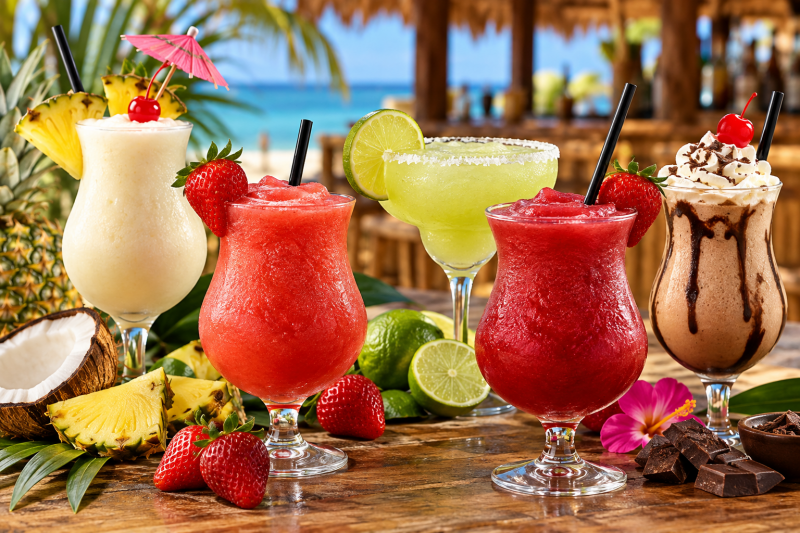
We made frozen piña coladas, strawberry piña coladas, daiquiris, strawberry daiquiris, and margaritas. Every drink was prepared individually in a blender.
And our customers loved them.
Today, when I walk into a restaurant and see a frozen drink machine, I generally order something else.
There's Something Special About a Fresh Piña Colada
Our piña coladas weren't made from a commercial premixed product.
We used Coco López cream of coconut, fresh-cut pineapple, a touch of pineapple juice, rum, and ice.
Everything went into the blender.
The result was a fresh, flavorful frozen cocktail with real pineapple character and the richness of cream of coconut.
A strawberry piña colada offered another variation.
We weren't limited to whatever flavor happened to be available in a machine.
We could prepare drinks to order, adjust the ingredients, and offer guests something special.
The Advantage Nobody Talks About: Premium Liquor
Here's something restaurant operators should consider.
When alcohol is already mixed into a frozen drink machine, the bartender generally has little flexibility to change the liquor used in an individual serving.
With a scratch-made cocktail, the possibilities are much greater.
A customer ordering a piña colada could choose a premium rum.
A frozen daiquiri could be made with a guest's preferred rum.
And imagine offering a Cadillac Frozen Margarita, prepared with premium 100% agave tequila, fresh lime juice, and Grand Marnier.
That's not simply another frozen drink.
That's a premium cocktail with an opportunity for a higher selling price.
The bartender can explain the difference, recommend the upgrade, and create additional revenue for the restaurant.
Why Limit Your Frozen Cocktail Menu?
A restaurant with a frozen drink machine may be limited to one or two flavors at a time, depending on the number of machine chambers.
But a properly equipped bar with a blender can offer an entire frozen cocktail selection.
Consider a menu featuring:
- Fresh Pineapple Piña Colada
- Strawberry Piña Colada
- Classic Frozen Daiquiri
- Fresh Strawberry Daiquiri
- Cadillac Frozen Margarita
- Frozen Mudslide
The frozen mudslide is particularly interesting because it can also be promoted as an after-dinner cocktail or even a dessert alternative.
With a relatively small group of ingredients and some thoughtful cross-utilization, a restaurant can create an appealing specialty frozen cocktail program.
And every one of those drinks provides an opportunity for premium liquor upgrades.
But Can You Make These Drinks in a Busy Bar?
Absolutely. I've done it.
We worked in a very busy bar, and we made our frozen cocktails individually.
The key was organization.
Properly prepared fruit, accessible ingredients, measured recipes, good equipment, and trained bartenders made the process manageable.
Certainly, a frozen drink machine can dispense cocktails faster than a bartender can blend them.
But speed alone shouldn't determine how a restaurant prepares its beverages.
If customers appreciate the quality, return for the drinks, and are willing to pay a premium, the additional preparation may be worthwhile.
What About the Alcohol?
Many commercial frozen drink machines contain a mixture that already includes the liquor.
That means the alcohol is distributed throughout the batch, and the bartender generally cannot change the brand or amount of liquor in an individual serving without modifying the drink.
Alcohol also affects the freezing point, so the mixture must be formulated to freeze correctly.
Some machines dispense nonalcoholic frozen bases, allowing the bartender to add liquor separately.
A scratch-made frozen cocktail offers another advantage: the bartender can measure the liquor for each order and offer different brands or premium upgrades.
A guest can order a traditional frozen margarita or choose a premium tequila.
That flexibility creates both customer satisfaction and additional selling opportunities.
A Frozen Cocktail Should Be an Experience
Presentation matters.
Imagine a freshly blended strawberry daiquiri served in attractive glassware with a fresh strawberry garnish.
Or a Cadillac Frozen Margarita with a beautifully prepared salted rim, fresh lime, and a distinctive presentation.
The bartender has an opportunity to create something memorable.
A well-made frozen cocktail can become a signature item that customers associate with the restaurant.
That is much harder to accomplish when the entire beverage program is built around convenience.
The Profit Opportunity
Restaurant operators often focus on labor savings when evaluating frozen drink machines.
But there is another side to the equation.
What if a scratch-made frozen cocktail commands a higher menu price?
What if guests upgrade to premium spirits?
What if a frozen mudslide creates an additional after-dinner sale?
And what if customers return because they remember how good that piña colada was?
The additional revenue and contribution margin may outweigh the extra labor involved.
Of course, operators should measure actual preparation time, ingredient costs, sales volume, and profitability rather than assume scratch-made is always more profitable.
Final Thoughts
I'm not suggesting frozen drink machines don't have a place in the hospitality industry. They certainly do, particularly in operations where speed and volume are the primary considerations.
But I've seen side-by-side comparisons of fresh frozen cocktails and machine-made drinks.
In my experience, the freshly prepared drinks were noticeably better.
A frozen drink machine may produce an acceptable cocktail.
But acceptable and exceptional are two very different things.
Restaurant operators should ask themselves a simple question:
Are we trying to make frozen cocktails as quickly as possible, or are we trying to make frozen cocktails that customers will remember, recommend, and come back for?
Sometimes the extra effort is what separates an ordinary restaurant from an exceptional one.
PDM Hospitality Consulting — Practical Restaurant Solutions