The Forgotten Art of Simple Restaurant Desserts
Sometimes the most profitable ideas are the ones we left behind.
PDM Hospitality Solutions | Restaurant Tips
Over the years, I've watched restaurant menus become more complicated, food costs increase, and operators struggle to find ways to improve profitability.
Yet sometimes I think we've forgotten some of the simplest ways to make money.
Take desserts, for example.
Today, many restaurants offer a handful of commercially prepared cakes, pies, and cheesecakes. There's nothing necessarily wrong with that approach. But I remember a time when restaurants created memorable desserts using just a few basic ingredients, attractive glassware, and a little imagination.
And customers loved them.
Remember Strawberries Romanoff?
When I worked at Charlie Brown's, we served a dessert called Strawberries Romanoff.
It was beautifully simple.
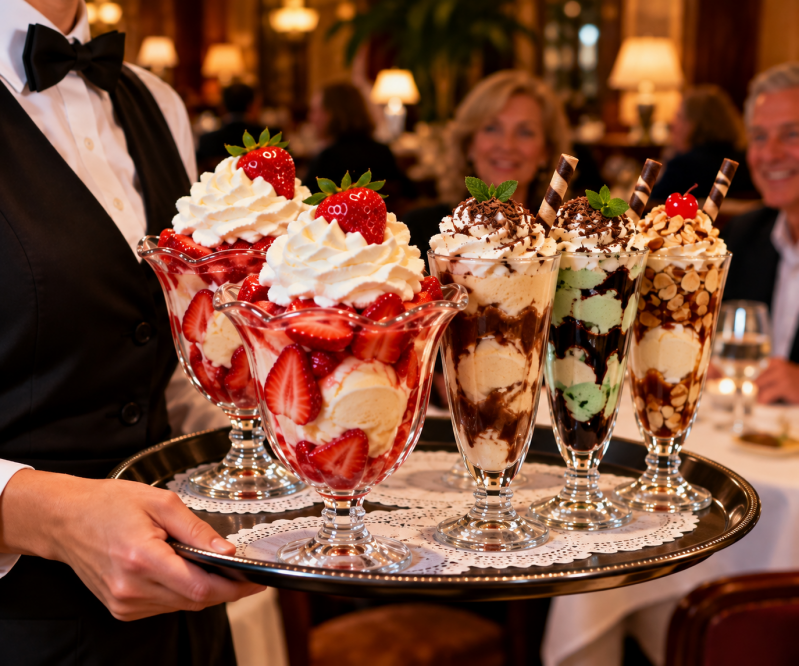
Fresh sliced strawberries, vanilla ice cream, and homemade whipped cream, served in an attractive tulip glass.
We also offered a blueberry version.
Nothing complicated. No expensive pastry equipment. No elaborate preparation.
But the presentation was beautiful, the ingredients were fresh, and the dessert was delicious.
The tulip glass made it look special. It wasn't just a bowl of ice cream. It was a restaurant dessert.
And customers ordered it.
Sometimes presentation is what transforms an ordinary dessert into something memorable.
Whatever Happened to Adult Parfaits?
Another dessert we made at Charlie Brown's was the adult parfait.
We used tall, attractive glasses, small scoops of vanilla ice cream, and different liqueurs.
Amaretto, crème de menthe, Baileys, and other selections allowed us to create several different desserts from essentially the same basic ingredients.
Think about that for a moment.
The ice cream was already in the freezer. The liqueurs were already behind the bar. The glassware was available.
With a little creativity, we had an entire selection of desserts without creating a complicated kitchen operation.
These desserts also offered something different: a combination of an after-dinner drink and dessert.
For restaurants licensed to serve alcohol, adult parfaits could still be an interesting addition today, provided proper alcohol controls and service regulations are followed.
Homemade Cheesecake Doesn't Have to Be Complicated
We also made our own cheesecake.
The recipe was remarkably simple.
A graham cracker crust, cream cheese, sugar, and vanilla extract formed the foundation.
After baking and cooling, we finished it with a sweetened sour cream and vanilla topping.
It was delicious on its own.
But we could also serve it with fresh strawberries or blueberries.
One basic cheesecake, several attractive presentations.
We didn't need a dozen different cakes sitting in refrigeration. We needed one excellent product that could be served several ways.
And when a server told a customer the cheesecake was made in-house, that meant something.
It still does.
Don't Overlook the Simplest Desserts
Think about how many excellent desserts can be made from inexpensive, familiar ingredients.
Warm chocolate chip cookies.
A brownie with vanilla ice cream.
Fresh strawberry shortcake.
Bread pudding with a warm sauce.
Pound cake with fresh berries and whipped cream.
A simple ice cream sundae.
None of these requires an elaborate pastry department.
In fact, some can be prepared ahead of time and finished in minutes.
The key is to make them special.
A warm brownie is good. A warm brownie with quality vanilla ice cream, chocolate sauce, and an attractive presentation becomes a dessert worth ordering.
Freshly baked cookies can be even more appealing when served warm.
You don't always need to invent something new. Sometimes you just need to execute something familiar exceptionally well.
Cross-Utilization Is Where the Opportunity Begins
Look at the ingredients used in the desserts we served at Charlie Brown's.
Vanilla ice cream, strawberries, blueberries, whipped cream, cream cheese, and a few liqueurs.
Those ingredients allowed us to create multiple dessert selections without carrying an enormous inventory.
Fresh strawberries could accompany cheesecake, ice cream, or shortcake.
Blueberries could be used in similar ways.
Vanilla ice cream could become a sundae, an adult parfait, or an accompaniment to a warm brownie.
That's smart menu planning.
Every additional ingredient creates purchasing, storage, inventory, and potential waste considerations.
The more ways you can use ingredients while maintaining quality, the easier it becomes to control costs.
The Numbers Deserve Attention
Let's say a restaurant develops a dessert that sells for $8 and has an ingredient cost of $1.50.
That's $6.50 in gross profit before labor and other operating expenses.
Sell just 20 per day, and you've generated $130 in daily gross profit.
Over 30 days, that's $3,900.
Of course, actual results depend on portions, labor, spoilage, and whether dessert sales are incremental. But the example demonstrates why a carefully designed dessert program deserves attention.
Desserts shouldn't be an afterthought.
They should be evaluated just like any other menu category.
Your Servers Are Part of the Dessert Program
I have always believed servers should be treated like a sales force.
Desserts are a perfect example.
There's a big difference between asking:
"Would anyone like dessert?"
And saying:
"We make our own cheesecake with a sweetened sour cream topping, and today we're serving it with fresh strawberries."
Or:
"Our chocolate chip cookies just came out of the oven. They're wonderful served warm with vanilla ice cream."
One approach simply asks a question.
The other creates interest.
Let your servers taste the desserts. Teach them what makes each one special. Encourage natural conversation rather than memorized sales scripts.
And remember, attractive desserts being carried through the dining room can generate interest all by themselves.
Keep the Menu Small and Make Every Dessert Count
I'm not suggesting every restaurant should start making ten different desserts.
Quite the opposite.
For many operations, three or four carefully selected desserts may be enough.
Consider offering:
- One excellent homemade signature dessert.
- One warm dessert served with ice cream.
- One fresh fruit dessert.
- Perhaps one rotating seasonal specialty or adult dessert.
Keep the ingredients manageable, standardize portions, and make sure the staff can execute every dessert consistently.
Measure what sells, what gets wasted, and what contributes the most profit.
Don't keep a dessert on the menu simply because it's always been there.
Bring Back a Little Showmanship
One thing I remember about the restaurant business years ago was the effort we put into making ordinary things feel special.
A beautiful tulip glass filled with strawberries, ice cream, and whipped cream wasn't complicated.
But it was attractive, delicious, and memorable.
A tall adult parfait with layers of ice cream and liqueur offered something customers couldn't necessarily make the same way at home.
A slice of homemade cheesecake with fresh fruit showed that someone in the kitchen had made an effort.
These weren't elaborate creations.
They were good ideas, executed well.
And that's something I believe today's restaurants could use more of.
Final Thought
Restaurants are always looking for the next big idea to increase sales and improve profitability.
Sometimes the answer isn't a new piece of equipment, an expensive marketing campaign, or another complicated menu item.
Sometimes it's a simple dessert served in a beautiful glass.
A homemade cheesecake.
Fresh berries and whipped cream.
Or a warm cookie that reminds customers why they enjoy going out to eat.
We've spent years trying to reinvent restaurant menus. Maybe it's time to bring back a few things we never should have forgotten.
PDM Hospitality Solutions
Practical Hospitality Experience. Real-World Solutions.
Helping new and existing hospitality operations improve service, strengthen operations, control costs, and discover opportunities for profitable growth.
PDMhospitalitysolutions.com