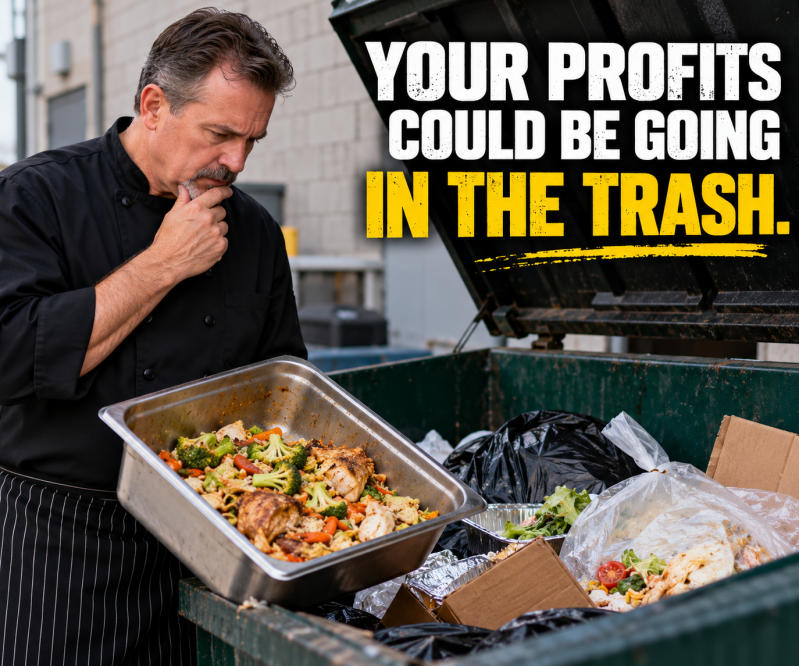
Your Dumpster May Be Telling You More Than Your Profit and Loss Statement
PDM Hospitality Solutions | Systems • Solutions • Training
When Was the Last Time You Looked in Your Dumpster?
Over my many years in foodservice management, I learned that some of the most valuable information about a restaurant's operation wasn't found in the office, on a computer, or even in the kitchen.
Sometimes it was sitting right in the dumpster.
I have always believed that a good manager needs to know what is being thrown away. Not just how much trash is being generated, but exactly what is going into it.
Food waste, broken equipment, disposable supplies, improperly prepared products, and even unopened food can all end up in the dumpster.
And every one of those items represents money.
The question is: Are you paying attention?
Food Waste Is More Than Just Spoilage
Let's say you walk out to the dumpster and discover a hotel pan containing several pounds of cooked vegetables.
Why were they thrown away?
-
Did the kitchen prepare too much?
-
Was someone following an outdated production schedule?
-
Were the vegetables cooked improperly?
-
Were they held too long?
-
Could smaller batches have prevented the waste?
Now imagine finding several pounds of cooked chicken or roast beef.
That should immediately get your attention.
Was the product overproduced? Was it improperly stored? Did someone fail to rotate inventory? Was the food discarded because it exceeded safe holding limits?
Every situation deserves an explanation.
The goal isn't to find someone to blame. The goal is to find out why it happened and prevent it from happening again.
Your Dumpster Can Reveal Problems With Portion Control
Imagine finding several plates' worth of French fries, vegetables, or other side dishes in the trash.
Maybe your portions are too large.
Maybe the food isn't being prepared properly.
Maybe customers simply don't like what you're serving.
A restaurant might proudly advertise generous portions, but if customers consistently leave half the food on their plates, those generous portions aren't necessarily creating value.
They're creating waste.
And waste directly affects food cost.
Pay attention to what comes back from the dining room. Your dishwashers and bussers may be able to tell you more about guest satisfaction than you realize.
Disposable Supplies Are Money Too
Food isn't the only thing I look for.
What about napkins, paper towels, plastic utensils, portion cups, takeout containers, aluminum foil, and disposable gloves?
These items may seem inexpensive individually, but their costs add up quickly.
Suppose an employee takes a stack of 25 napkins to clean up a small spill when two would have done the job.
Or someone uses an oversized takeout container for a small portion of food.
Maybe employees routinely throw away unused portion cups, lids, or packaging.
You may not notice these expenses individually, but over weeks and months, they become significant.
Supplies are part of your operating expenses, and they deserve the same attention as food and labor.
What About Broken Glassware, China, and Smallwares?
A dumpster can also tell you something about how your employees handle equipment.
Are you finding broken plates, glasses, ramekins, or other smallwares?
Some breakage is unavoidable in a busy foodservice operation.
But excessive breakage may point to improper handling, overcrowded dish stations, poorly arranged storage areas, or employees who simply haven't been trained properly.
A restaurant can lose hundreds or even thousands of dollars annually through unnecessary breakage.
And those replacements don't come out of thin air. They come directly out of your profits.
You May Discover Problems You Never Knew Existed
I have always believed in being a hands-on manager.
I didn't want to wait until the end of the month to discover that my food cost was out of control.
I wanted to know what was happening today.
If I found a significant amount of food in the trash, I wanted to understand why.
If I found unopened products, I wanted to know how they got there.
If I noticed excessive supplies being discarded, I wanted to address it.
Sometimes the answer was poor training. Sometimes it was improper production planning. Sometimes it was carelessness.
And sometimes it was simply a system that needed improvement.
But you cannot correct a problem you don't know exists.
Turn Your Findings Into Better Systems
Looking at waste should lead to action.
If you're repeatedly throwing away prepared food, review your production schedules.
If large quantities of food are coming back from the dining room, examine portion sizes and food quality.
If you're constantly replacing glassware, evaluate handling procedures and storage.
If disposable supply usage is excessive, establish reasonable usage standards and track purchases.
A simple waste log can be one of the most valuable tools in your operation.
Record what was discarded, the quantity, the reason, and the estimated cost.
Then review that information regularly.
You might be surprised at how quickly patterns begin to appear.
Don't Turn It Into a Witch Hunt
This is important.
Employees shouldn't be afraid to report waste.
If someone burns a pan of food, I want to know about it. If a case of produce spoils, I want to understand what happened.
The worst thing you can do is create an atmosphere where employees hide mistakes because they're afraid of being reprimanded.
When employees understand that the goal is to improve the operation rather than punish people, they become part of the solution.
Teach them what waste costs.
Show them how proper production, portion control, handling, and inventory rotation protect the business.
A well-trained employee who understands the financial side of the operation can be one of your greatest assets.
A Manager's Job Is to Know What's Going On
I've always believed that good management involves observation.
You can't manage an operation entirely from an office.
Walk your kitchen. Check your walk-ins. Watch your receiving procedures. Talk with your dishwashers. Look at what is coming back from the dining room.
And yes, occasionally inspect what is being discarded, using safe procedures and designated waste collection points rather than climbing into dumpsters or handling hazardous trash.
You don't need to personally sort through garbage every day. A controlled waste audit before disposal can reveal the same problems more safely.
The objective is simple: Find the waste before the waste finds your profits.
Final Thought
A restaurant can be busy, customers can be happy, and sales can be strong.
But that doesn't necessarily mean the operation is making the money it should.
I have seen how small operational problems, repeated day after day, can quietly eat away at profits.
An extra portion here. A pan of discarded food there. A case of supplies wasted. A few broken glasses.
Individually, they may not seem important.
Collectively, they can represent thousands of dollars in lost profit.
Your dumpster may be telling you a story about your operation. The question is whether you're willing to listen.
PDM Hospitality Solutions
Practical experience. Real-world solutions. No long-term contracts.
Let's get to work.
PDMhospitalitysolutions.com