Choosing the Right Griddle
There are two decisions when purchasing a griddle: the temperature control and the cooking surface. Both of these will effect the cooking performance, food quality, labor, cleaning and actual equipment cost.
IMPORTANT: match the equipment to the menu
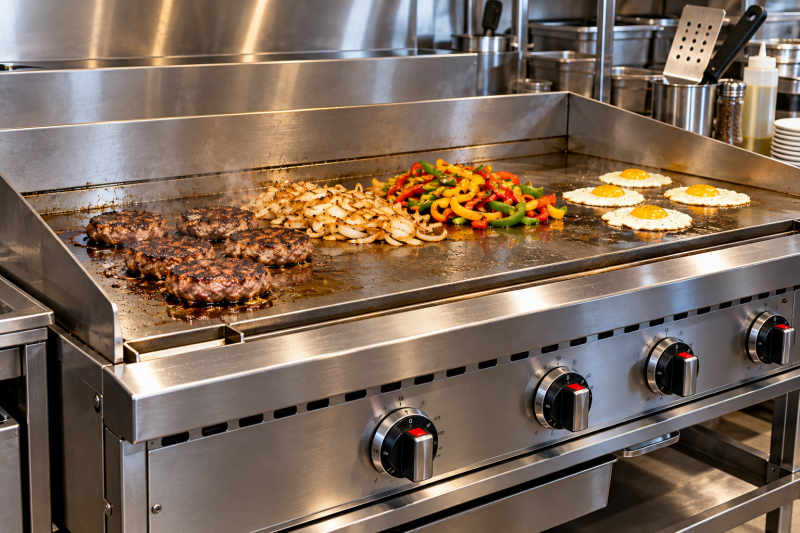
A manual control griddle with a polished steel surface can be appropriate for a high volume burger operation. A thermostatic controlled griddle with a chrome-plated surface might be good for breakfast operation with delicate menu items.
Temp Control Systems Difference
Manual Control - the operator has to adjust the flame rather than select a temp. The burner will stay on all the time. This can be okay for burgers, steak sandwiches and things that aren't cooked to a specific t p. This griddle is not good for breakfast type restaurants. The way a manual T-stat operates is like a gas pedal in a car. Need more heat you turn it up, when you have too much heat you turn it down. Most menus will require constant adjustment. So you may start with medium heat but as the shift goes on the heat will keep increasing. Can be difficult to control. Advantage - inexpensive
Modulating Thermostat - this T-stat adjusts burner output as the grill plate approaches a set temperature. This is a big improvement over manual control T-stat but still not the answer if you want specific temps. This griddle will still have a tendency to have temps that are higher than wanted. My problem is that it says T-stat control but they are not as precise as I would like. The disadvantage is that they can be expensive compared to a manual thermostat.
Snap-action control. This T-sat turns the burner fully on and off as the plate reaches desired temperature. The sensors near the plate can produce much more accurate temps. Advantage: consistent cook temps, automatic heat regulation. Great when multiple cooking zones are needed. The disadvantage is that it is expensive.
Polished Steel vs Chrome Cook surface
Polished Steel - Lower initial cost, durablity, can take a beating,excellent for searing, can be seasoned for easy food release and suitable for demanding everyday use. Disadvantages it gives off a lot of heat, requires seasoning and regular maintenance, can rust if not taken care of.
Chrome-plated steel - smooth, relatively low stick, easy cleanability, no seasoning ever and looks great in exhibition kitchens. There is also Less radiant heat towards the cooks. This grill does not give off a lot of heat to the cook working it. Disadvantages are it can be very expensive, surface can be damaged and no chopping on the griddle at all.
Plate Thickness and Recovery a griddle with excellent temperature controls can still struggle during busy meal periods if the plate is too thin. A thicker plate generally stores more heat and will resist temperature drops when loaded with food. The only small trade off is slower initial preheating and additional weight.
½ inch plate Light duty applications
¾ inch plate Versatile for most applications
1 inch plate Great thermal retention for demanding operations
Which one do to purchase ?
Before purchasing a griddle, establish a menu, estimate peak hourly performance and decide if you need varying temperatures and also consider how much experience your cooks will have. A breakfast restaurant that serves lunch and dinner should purchase a T-stat controlled griddle able to have temp specific zones. A burger restaurant can easily use a manual control griddle.
BEST Idea - Buy the griddle for the menu and peak production. This is most likely the focal piece of equipment. Bite the bullet and buy what you need. Don't skimp, you will regret it. Call me I will find you a savings in another area
I have sold foodservice equipment for over 30 years. So many times clients purchase the wrong item to save a few dollars. Make an intelligent decision and you won't be sorry.
PDM Hospitality Solutions