Stop Scripting Your Servers — Teach Them How to Sell Naturally
Great Service Isn't About Memorizing Words. It's About Knowing What to Say, When to Say It, and How to Say It.
By Philip Moricone | PDM Hospitality Solutions
Over my many years in the restaurant business, I've developed some strong opinions about training servers. One of them is that I'm not a big believer in server scripts.
I've never liked the idea of telling every server exactly what to say to every guest. People have different personalities, different communication styles, and different comfort levels. Some servers are outgoing and entertaining. Others are quieter, more professional, and reserved. Both can be outstanding servers.
When we force everyone to follow the same script, we often take away the very thing that makes great service special: personality and genuine hospitality.
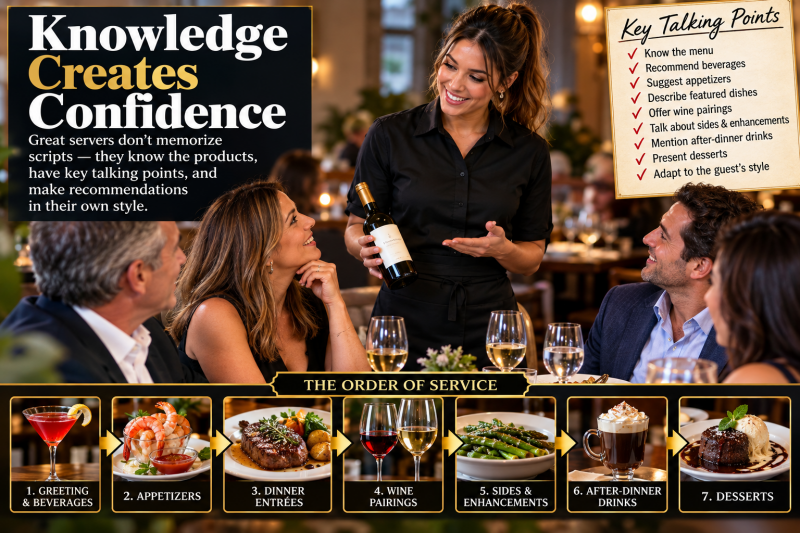
What I do believe in is teaching servers talking points, product knowledge, sales techniques, and a consistent order of service.
There's a big difference between teaching someone what to say and teaching someone what they need to communicate.
Talking Points vs. Scripts: What's the Difference?
A script tells a server exactly what words to use.
A talking point gives the server the information and objective, allowing them to deliver the message naturally.
For example, imagine a restaurant featuring a fresh Atlantic salmon special.
The scripted approach:
"Good evening. Tonight our chef is featuring Atlantic salmon served with roasted potatoes and seasonal vegetables. Would you like to try it?"
There's nothing necessarily wrong with that statement, but imagine hearing every server repeat those exact words throughout the dining room.
The talking-point approach:
The server knows:
- The salmon is fresh, not frozen.
- It's grilled and finished with a lemon-herb butter.
- It comes with roasted potatoes and seasonal vegetables.
- A Sauvignon Blanc or lightly oaked Chardonnay would complement the dish.
- It's one of the chef's featured entrées.
Now let the server use that information in their own words.
One server might say, "If you enjoy seafood, our salmon is really good tonight. It's grilled with a lemon-herb butter, and I'd recommend a glass of Sauvignon Blanc with it."
Another might say, "Before you decide, I want to mention our salmon special. It's a beautiful dish, and the lemon-herb butter really brings it together."
Same product. Same information. Different personalities.
That's training, not memorization.
The Order of Service Is Nonnegotiable
Although I believe servers should have freedom in how they communicate, I don't believe they should have freedom to skip important steps in service.
Every restaurant needs a defined order of service. It creates consistency, improves the guest experience, and provides natural opportunities to increase sales.
The order should be flexible enough to accommodate the guest's pace, but structured enough that nothing important is forgotten.
1. The Greeting: Make the Guest Feel Welcome
The first interaction sets the tone for the entire meal.
Servers should greet guests promptly, introduce themselves when appropriate, and make guests feel comfortable.
This isn't the time for a long sales pitch.
The objective is simple: establish a connection, explain anything important about the menu, and begin the beverage conversation.
2. Beverages: The First Sales Opportunity
A server shouldn't automatically start with "What can I get you to drink?"
That's an order-taking question, not necessarily a selling question.
The server should know the restaurant's beverage offerings, including:
- Signature cocktails and popular classics
- Premium spirits and available upgrades
- Draft and bottled beers
- Wines by the glass and bottle
- Specialty nonalcoholic beverages
A natural talking point might be, "We make a terrific Old Fashioned here, and our bartender has a seasonal cocktail you might enjoy."
The objective isn't to pressure the guest. It's to make the guest aware of something they might otherwise overlook.
A guest who orders water may simply prefer water. Respect that. But give guests an opportunity to discover what the restaurant offers.
3. Appetizers: Sell the Beginning of the Experience
Appetizers are one of the easiest opportunities to increase the average check while improving the dining experience.
The server should be familiar with the appetizers, portion sizes, ingredients, and which dishes are ideal for sharing.
Instead of simply asking, "Any appetizers?" try a recommendation.
"Our crab cakes are one of our most popular starters. They're great to share while you're looking over the menu."
Servers should be trained to recommend one or two specific items rather than reciting an entire list.
A good recommendation sounds like helpful advice, not a sales pitch.
4. Dinner: Know the Menu Inside and Out
Here's where product knowledge becomes especially important.
A server should never be in the position of knowing less about a dish than the guest reading the menu.
Servers need to understand:
- Primary ingredients and preparation methods
- Flavor profiles and sauces
- Portion sizes
- Cooking temperatures and doneness options
- Chef's specials and featured dishes
- Appropriate substitutions and modifications
- Common allergens and dietary considerations
When a guest asks, "What's good here?" the server should be prepared with a thoughtful recommendation.
Not every guest wants the most expensive entrée. Sometimes the right recommendation is a moderately priced dish that perfectly fits the guest's preferences.
The goal is to earn the guest's confidence. When guests trust their server, recommendations become much more effective.
5. Wine Pairing: An Opportunity Too Often Missed
This is one area where I believe many restaurants leave money on the table.
Servers don't need to be sommeliers, but they should understand basic wine pairings.
For example:
Entrée
Possible wine pairing
Grilled steak
Cabernet Sauvignon
Roast beef
Merlot or Cabernet Sauvignon
Grilled salmon
Pinot Noir or Chardonnay
Chicken with cream sauce
Chardonnay
Shrimp or light seafood
Sauvignon Blanc or Pinot Grigio
Pasta with tomato sauce
Chianti or Sangiovese
These are starting points, not rigid rules. Sauces, seasoning, and the guest's personal taste matter.
The key is to train servers to connect the beverage to the meal.
"That filet would be excellent with a glass of our Cabernet."
A simple recommendation like that can increase beverage sales without making the guest feel pressured.
And sometimes the best recommendation is a bottle of wine for the table rather than individual glasses.
6. Side Dishes and Enhancements: Don't Forget the Details
Another frequently missed opportunity is the side dish or enhancement.
Does the restaurant offer sautéed mushrooms, grilled asparagus, loaded baked potatoes, additional shrimp, or a premium sauce?
Servers should know which enhancements complement particular entrées.
For example:
"Would you enjoy some sautéed mushrooms with your steak? They're one of our most popular additions."
Again, this isn't about pushing extras onto the guest. It's about presenting worthwhile choices.
One important point: servers should always make additional charges clear. Guests should never feel surprised when the check arrives.
7. Check Back and Maintain the Table
Once the entrées arrive, the sales process doesn't stop, but service must always come first.
Servers should check that the food is prepared correctly, watch beverage levels, anticipate needs, and remove unnecessary dishes without rushing the guests.
A well-timed offer of another beverage can be appropriate.
Constant interruptions are not.
Great servers learn to read their tables.
A couple celebrating an anniversary may want a leisurely evening. A business guest may need to finish quickly. A family with young children may appreciate faster service.
The order of service is the framework. The guest determines the pace.
8. After-Dinner Drinks: The Forgotten Profit Opportunity
I've always believed restaurants miss a tremendous opportunity by overlooking after-dinner beverages.
Years ago, offering a cordial, brandy, Irish coffee, or specialty coffee drink was a natural part of the dining experience.
Today, many servers never mention them.
Consider the possibilities:
- Irish coffee
- Jamaican coffee
- Baileys and coffee
- Amaretto
- Sambuca
- Cognac or brandy
- Espresso or cappuccino
- Dessert wines and ports
These beverages can offer attractive profit margins and create a memorable ending to the meal.
But if the server doesn't mention them, many guests won't think to order one.
A natural talking point might be:
"If you're not quite ready for dessert, we make a wonderful Irish coffee."
That one suggestion may turn an ordinary ending into a memorable experience.
9. Desserts: Never Assume the Guest Isn't Interested
How often do we hear a server say, "Did you save room for dessert?"
That question almost invites the guest to say no.
Instead, servers should know the dessert menu and be able to describe a few favorites.
"Our warm chocolate cake is excellent, especially with vanilla ice cream. It's also a nice dessert to share."
A dessert recommendation can be made naturally, even if the guest appears full.
Guests may decline, and that's perfectly fine.
But they should have the opportunity to hear what's available.
Dessert, coffee, and an after-dinner drink can significantly increase the value of a table while giving guests a more complete dining experience.
10. The Farewell: Finish as Strong as You Started
The last impression is often as important as the first.
Servers should thank guests sincerely, handle payment efficiently, and invite them back.
A guest should never feel forgotten after the check has been paid.
The objective is not simply to finish the transaction. It's to make the guest want to return.
Train Servers to Be Salespeople, Not Order Takers
I have always believed that a restaurant server is much more than someone who takes an order and delivers food.
Servers are the restaurant's front-line sales force.
But selling in hospitality is different from selling in a retail store.
The best restaurant salesmanship doesn't feel like selling at all. It feels like someone helping you have a better dining experience.
Consider the difference between two servers.
One takes a drink order, an entrée order, delivers the food, and brings the check.
The other recommends a cocktail, suggests an appetizer, helps select an entrée, offers a complementary wine, mentions a side dish, and finishes with dessert or an after-dinner beverage.
Both may provide polite service.
But the second server has created more opportunities for the guest to enjoy the restaurant's offerings.
And they've created more revenue for the business.
What Could Better Talking Points Mean Financially?
Let's use a simple example.
Imagine a restaurant serving 150 guests per day.
Through better product knowledge and natural recommendations, servers generate an additional average of just $5 per guest.
That's not an unrealistic objective in a full-service restaurant with cocktails, appetizers, wine, desserts, and coffee drinks.
The math is straightforward:
- 150 guests per day
- $5 additional sales per guest
- $750 additional daily revenue
- $22,500 additional monthly revenue (30 days)
- $270,000 additional annual revenue (360 days)
That's additional sales, not profit. Food, beverage, labor, and other costs still apply.
And it's an illustration, not a guarantee.
But it demonstrates why server training deserves serious attention.
A restaurant doesn't always need more customers to increase revenue. Sometimes it needs to do a better job serving and selling to the customers it already has.
How I Would Train a Server
Rather than hand a new employee a script to memorize, I would build training around knowledge, confidence, and consistency.
First, teach the menu. Have servers taste the food whenever practical. Let them experience the flavors, understand the ingredients, and learn what makes each dish special.
Second, teach the talking points. Identify the two or three most important things a server should know about each featured item.
Third, teach the order of service. Make sure every server understands the progression from greeting through farewell, including the appropriate opportunities to recommend products.
Fourth, practice real conversations. Role-play different guest situations, but encourage servers to use their own words. Coach the message, not the exact phrasing.
Fifth, measure results. Look at appetizer attachment rates, beverage sales, average checks, dessert sales, and guest feedback. Use those results to coach and recognize employees, not simply to pressure them.
Finally, encourage personality. Let outgoing servers be outgoing. Let quieter servers develop their own confident, professional style.
Not every server needs to be the life of the party.
They just need to be knowledgeable, attentive, genuine, and comfortable making recommendations.
One Final Thought: Know When Not to Sell
An important part of good salesmanship is knowing when to stop.
Some guests want recommendations. Others know exactly what they want.
An experienced server recognizes the difference.
Never allow sales goals to interfere with hospitality. Don't interrupt conversations unnecessarily, pressure guests into expensive items, or recommend something that doesn't fit their needs.
A guest who feels respected and well cared for is much more valuable than a guest who feels they've been oversold.
My Bottom Line
I don't want a dining room full of servers repeating the same memorized lines.
I want servers who understand the menu, know the beverages, recognize sales opportunities, and can communicate confidently in their own style.
I want a consistent order of service, but I also want personality.
Teach the talking points. Teach the products. Teach the order of service. Then let your servers be themselves.
Because the best servers don't sound like they're selling.
They sound like they know what they're talking about.
PDM Hospitality Solutions
Real-World Hospitality Experience | Systems • Solutions • Training
Helping restaurants improve service, increase sales, and