The $10 Slice of Cheesecake: A Sweet Opportunity for Restaurant Profits
PDM Hospitality Solutions
Sometimes the most profitable menu items are the simplest.
Walk into many restaurants today and you'll find New York-style cheesecake selling for $9, $10, or even $12 a slice. Customers willingly pay these prices for a good dessert, especially when it's presented properly.
But here's the question restaurant owners should be asking:
Why are we buying expensive, premade desserts when we could be making something better ourselves?
I Remember Making Cheesecake from Scratch
Years ago, when I worked at Charlie Brown's, we made our own cheesecake.
Nothing complicated. Cream cheese, sugar, vanilla extract, and a simple graham cracker crust.
I would make 48 at a time.
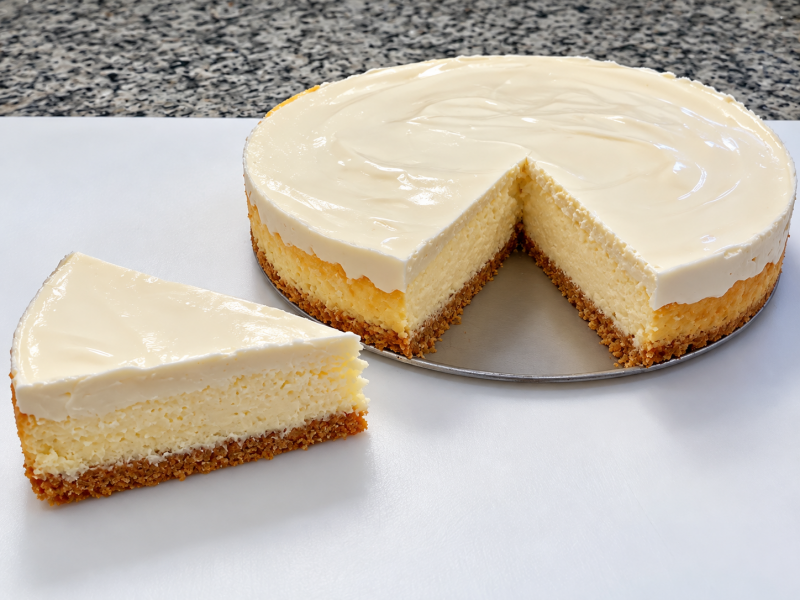
I made the one in the photo with the original recipe I learned 50 years ago.
After baking and cooling, we finished them with a sweetened sour cream and vanilla topping.
They were rich, creamy, delicious, and remarkably simple to prepare.
We could serve them plain or dress them up with fresh strawberries or blueberries.
There was no need for an elaborate pastry department or expensive specialty equipment.
Just a good recipe, consistency, and a little pride in what we served.
Let's Talk About the Numbers
Our actual ingredient cost was $9.50 per cheesecake. Consider what those numbers would look like today if we sold each cheesecake in 12 slices at $9.95 per slice.
Item
Amount
Ingredient cost per cheesecake
$9.50
Number of slices
12
Ingredient cost per slice
$0.79
Selling price per slice
$9.95
Ingredient food cost percentage
8.0%
Gross profit per slice
$9.16
Gross profit per cheesecake
$109.90
The $9.50 reflects our historical ingredient cost, not necessarily what the same recipe would cost to produce today. The selling price and portion count are illustrative. Gross profit is before labor, utilities, garnishes, waste, and other operating expenses.
But the opportunity is obvious.
Sell just two whole cheesecakes by the slice each day, and you're generating $1,671.60 in weekly dessert sales over a seven-day week.
That's from one dessert!
And remember, I was making 48 cheesecakes at a time. At our historical ingredient cost, that was just $456 in ingredients for the entire batch.
The potential revenue from 48 cheesecakes at today's illustrative selling price would be $5,731.20.
That's the kind of opportunity worth examining.
The Difference Between Homemade and Purchased
I'm not suggesting every restaurant should make every dessert from scratch.
There are excellent commercially prepared desserts available, and sometimes purchasing them makes perfect operational sense.
But consider the advantages of making your own cheesecake.
You control the ingredients, portion size, quality, freshness, and presentation.
You can also create variations without carrying an extensive dessert inventory.
One basic cheesecake becomes several menu opportunities:
- Classic New York-style cheesecake
- Fresh strawberry cheesecake
- Blueberry cheesecake
- Cheesecake with warm chocolate sauce
- Seasonal fruit cheesecake
You don't need five different cheesecakes sitting in your refrigerator. You need one excellent cheesecake and a few carefully selected toppings.
That's smart menu engineering and ingredient cross-utilization.
Presentation Is Part of the Profit
One of the lessons I learned managing restaurants is that guests buy with their eyes.
A generous slice of cheesecake served on a chilled plate with fresh strawberries, a little sauce, and an attractive presentation becomes much more than an ordinary dessert.
And don't underestimate the power of a server walking through the dining room carrying a beautiful dessert.
Other tables notice.
Customers start asking questions.
That's advertising you didn't have to pay for.
Your Servers Should Be Selling Dessert
I've always believed servers should be treated as a sales force, not simply order takers.
Imagine your server saying:
"Our cheesecake is made right here. We finish it with a homemade sweetened sour cream topping, and today we have beautiful fresh strawberries to go with it."
That's far more appealing than simply asking:
"Anybody want dessert?"
A knowledgeable, enthusiastic server can turn an ordinary cheesecake into a signature item.
And at nearly $10 per slice, even a modest increase in dessert sales can make a meaningful difference.
Don't Forget Portion Control and Waste
Of course, profitability doesn't happen automatically.
A cheesecake must be properly portioned, refrigerated, dated, and handled safely.
If one employee cuts 12 slices and another cuts 9, your food-cost calculations go right out the window.
You also need to account for unsold portions, toppings, labor, and actual production costs.
A low ingredient cost doesn't guarantee a profitable dessert if half the cheesecake ends up in the trash.
Consistency and inventory management are just as important with desserts as they are with steaks, seafood, or any other menu item.
Sometimes Simple Is Better
Restaurants often complicate their dessert menus.
They purchase elaborate frozen cakes, oversized specialty desserts, and expensive products that require significant freezer space.
Meanwhile, a simple homemade cheesecake may offer better control, a stronger identity, and excellent profit potential.
The lesson isn't that every restaurant needs homemade cheesecake.
The lesson is to examine what you're purchasing, what you could produce yourself, and whether you're overlooking profitable opportunities.
A cheesecake that historically cost us $9.50 in ingredients shows just how profitable a simple, well-executed dessert can become.
Sometimes improving restaurant profitability doesn't require a new menu, expensive equipment, or an elaborate marketing campaign.
Sometimes it starts with cream cheese, sugar, vanilla, and a graham cracker crust.
PDM Hospitality Solutions
Practical Experience. Real Solutions. Better Hospitality.
Helping restaurants and hospitality businesses improve operations, control costs, strengthen service, and discover opportunities for greater profitability.
PDMhospitalitysolutions.com